 English
 عربي
عربي Русский
 Français
 Español
 Deutsch
Bénéficiez d'une clarté supérieure et d'une fiabilité à toute épreuve avec le DM-900UV, une radio DMR bibande de 10 W dotée d'une étanchéité IP68 et d'une capacité d'enregistrement vocal de 300 heures.
EN SAVOIR PLUS

À 2h du matin, la voie ferrée est calme.
Les passagers sont partis, mais la voie ferrée est toujours là.
Une équipe d'entretien des voies travaille à plusieurs kilomètres de la gare. Une équipe d'électriciens vérifie les équipements en bordure de voie. Un superviseur se déplace entre les zones de travail, tandis qu'un véhicule de service transporte des outils vers un autre secteur.
Une équipe a ensuite besoin d'aide.
Le superviseur doit les contacter immédiatement.
Mais que se passe-t-il s'il n'y a pas de réseau mobile ?
Que se passe-t-il si les radios analogiques existantes ne couvrent qu'une partie de la zone de travail ?
Et si la compagnie ferroviaire ne veut pas remplacer des centaines de radios qui fonctionnent encore ?
Voilà les véritables questions qui se posent dans un projet de communication ferroviaire.
Il n'existe pas de radio idéale pour tous les cheminots. Un employé de gare, une équipe d'entretien des voies en zone isolée et un superviseur régional peuvent avoir des besoins de communication totalement différents.
Une meilleure approche consiste à adapter le système radio à l'équipe, à la zone de travail et au réseau disponible.
KANGLONG propose plusieurs technologies radio pouvant être utilisées pour différentes applications ferroviaires :
DMR | LoRa Mesh | 4G PoC | Analogique haute puissance | Analogique puissance standard | Double mode
Le choix dépend principalement de trois choses :
Où travaille l'équipe
La disponibilité d'un réseau
Si le client possède déjà un système radio existant
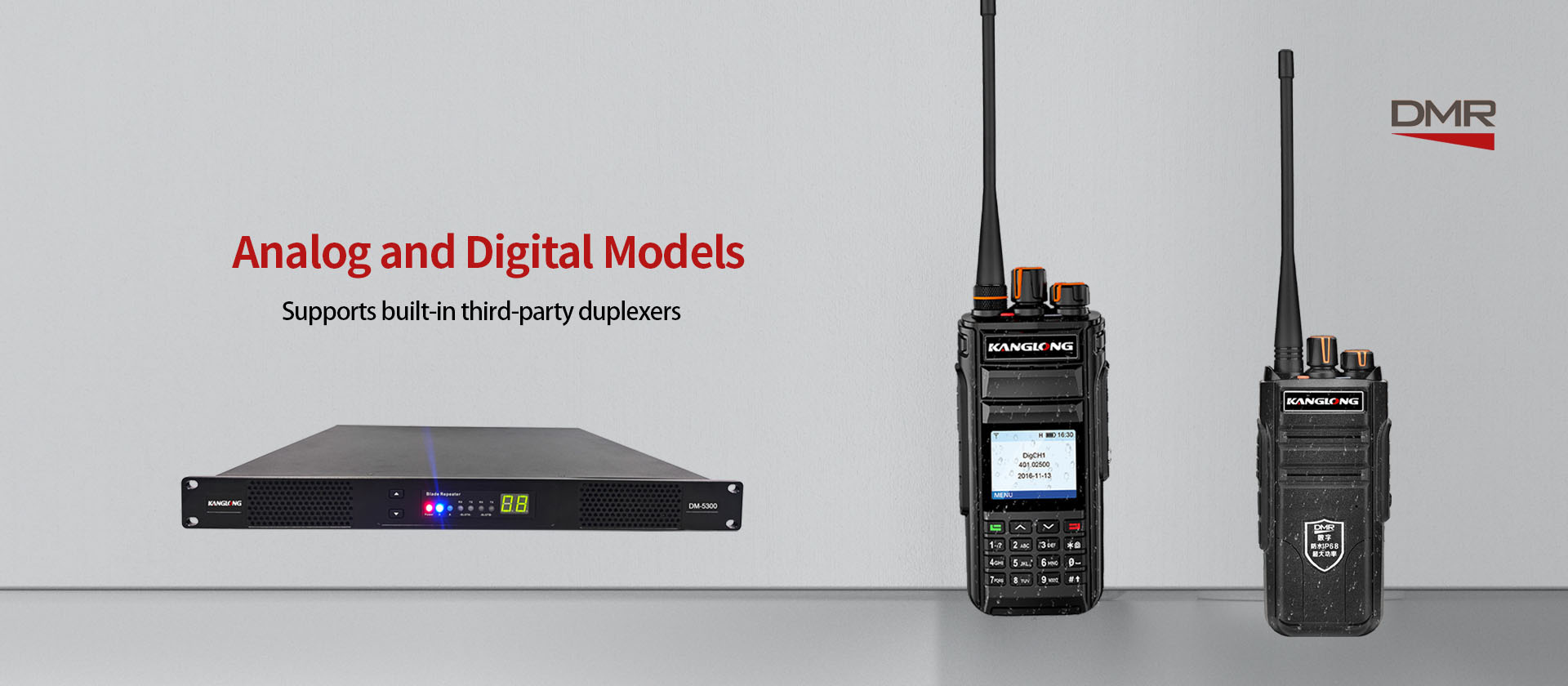
Le DMR est un choix pratique pour les équipes ferroviaires qui ont besoin d'une communication vocale professionnelle et organisée au sein d'une zone définie.
Les équipes chargées de la maintenance des voies, de l'ingénierie, de la sécurité et des gares de triage peuvent se voir attribuer des canaux ou des groupes distincts.
Par exemple:
Canal 1 — Entretien des voies
Canal 2 — Électrique / Signal
Canal 3 — Inspection
Chaîne 4 — Superviseur
Si la couverture directe des appareils portables ne suffit pas, un répéteur DMR peut être ajouté.
La technologie DMR est particulièrement adaptée aux opérateurs ferroviaires qui disposent déjà d'une infrastructure radio numérique ou qui ont besoin d'une communication de groupe structurée.
Le DM-800 est un émetteur-récepteur portable DMR IP68 conçu pour les travaux extérieurs exigeants. Il peut être utilisé pour la maintenance des voies, l'ingénierie, la sécurité et d'autres équipes ferroviaires professionnelles.
L'avantage principal est simple : les travailleurs peuvent communiquer rapidement sans dépendre d'un réseau cellulaire.
Certains tronçons de voie ferrée présentent un problème différent :
Il n'y a tout simplement pas de réseau.
Sur un circuit isolé, la couverture 4G peut être inexistante. Une zone de maintenance temporaire peut être éloignée des infrastructures de communication existantes. Les tunnels, les montagnes et les imposantes structures en béton peuvent également rendre les communications classiques difficiles.
C’est là que la solution KANGLONG LoRa Mesh peut être envisagée.
Il est conçu comme un réseau de communication indépendant et auto-organisé. Il ne nécessite ni carte SIM, ni réseau cellulaire, ni Wi-Fi.
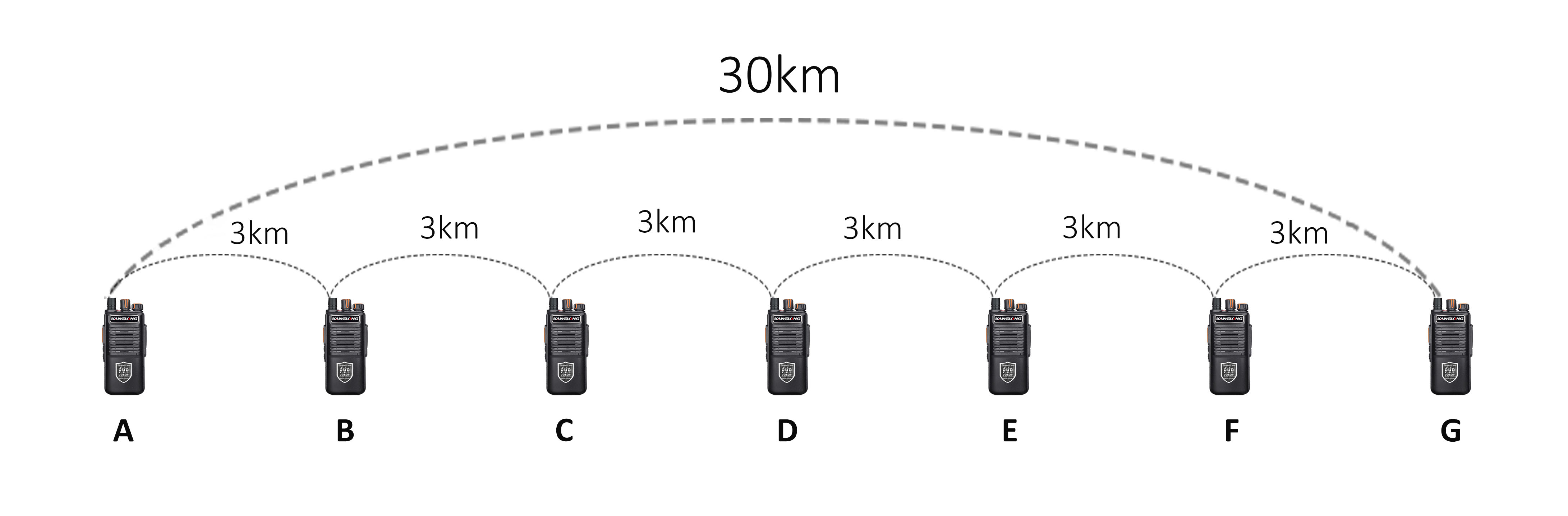
CLes modules LoRa compatibles forment automatiquement un réseau maillé et chaque appareil peut également servir de relais. Les signaux peuvent se propager d'un appareil à l'autre jusqu'à 30 niveaux. Lorsque le signal direct s'affaiblit, le système peut automatiquement transférer la communication via un autre nœud disponible.
Par exemple:
Radio A → Radio B → Radio C → Radio D → Radio E
La communication ne dépend pas uniquement de la distance directe entre A et E.
Pour les zones plus vastes ou plus difficiles d'accès, des répéteurs dédiés peuvent être ajoutés.
D6000 — Répéteur fixe/véhicule de 20 W
D6000R — Répéteur portable 18 W avec batterie
D7000 — Répéteur solaire de 20 W pour déploiement hors réseau permanent
Ces répéteurs peuvent contribuer à étendre le réseau LoRa Mesh dans les sections ferroviaires isolées.
Le D750 est un terminal portable LoRa Mesh IP68 de 8 W avec une capacité de relais à 30 niveaux.
Pour un projet de maintenance ferroviaire temporaire, un D6000R peut être positionné comme relais portable.
Pour une section de voie ferrée isolée permanente, un répéteur solaire D7000 peut être envisagé.
Important : Le système LoRa de KANGLONG est indépendant des systèmes radio DMR et analogiques. Les produits LoRa communiquent entre eux ; ils ne communiquent pas directement avec les talkies-walkies DMR ou analogiques classiques.
Un superviseur ferroviaire peut avoir besoin de communiquer avec des équipes situées dans différentes gares ou sur un vaste territoire.
C’est là que la preuve de concept 4G devient utile.
Les radios PoC utilisent le réseau cellulaire pour la communication push-to-talk, les utilisateurs ne sont donc pas limités par la couverture d'un répéteur radio local.
Les utilisateurs types comprennent :
superviseurs régionaux
Responsables des opérations
Responsables de la maintenance
équipes de service mobiles
entrepreneurs
Des équipes travaillent sur plusieurs sites ferroviaires
Mais il existe une autre option qui peut contribuer à réduire les coûts d'exploitation des preuves de concept.
Certains modèles KANGLONG PoC, y compris les G320, G360 et Android PZ-56, prend en charge le Wi-Fi.
Cela signifie que lorsque les travailleurs se trouvent dans un endroit disposant d'une connexion Wi-Fi fiable, la radio peut se connecter directement au Wi-Fi au lieu d'utiliser une carte SIM pour les données cellulaires.
Par exemple, le Wi-Fi est peut-être déjà disponible dans :
gares ferroviaires
salles de contrôle
bureaux de maintenance
Entrepôts
Dépôts
Ateliers
gares ferroviaires
Dans ces zones, les utilisateurs peuvent utiliser la plateforme PoC via Wi-Fi sans consommer de connexion de données mobiles SIM.
Cela peut réduire le nombre de cartes SIM nécessaires et contribuer à diminuer les coûts de communication récurrents.
Les G320 et G360 sont des radios PoC Wi-Fi/4G compactes, tandis que le PZ-56 Android prend en charge le Wi-Fi, le Bluetooth, le GPS et les applications basées sur Android.
Pour le personnel ferroviaire qui se déplace régulièrement entre des bâtiments couverts par le Wi-Fi et des zones extérieures, ces modèles peuvent s'avérer particulièrement pratiques.
Wi-Fi disponible → connectez-vous directement au Wi-Fi.
En dehors de la couverture Wi-Fi → utilisez la 4G avec carte SIM.
Cela offre au client une plus grande flexibilité au lieu de dépendre entièrement des données mobiles.
Certains clients du secteur ferroviaire n'ont pas besoin du DMR ni d'une plateforme de communication en réseau.
Ils souhaitent simplement une radio analogique classique avec une puissance d'émission plus élevée.
Pour les grandes zones de travail en extérieur, une radio analogique de 10 à 20 W peut être envisagée, sous réserve des réglementations locales en matière de fréquences et des exigences de licence.
Les applications typiques comprennent :
Grandes gares de triage
Entretien des voies
Ingénierie de plein air
sections de construction
véhicules d'entretien
Le T-930 est une radio analogique de 20 W conçue pour les utilisateurs qui souhaitent une communication radio traditionnelle de haute puissance.
Cette solution peut être envisagée lorsque la priorité du client est une communication radio simple et directe plutôt qu'une plateforme numérique ou cellulaire.
Une puissance plus élevée n'implique pas automatiquement une couverture réelle plus étendue. La position de l'antenne, le terrain, la fréquence, les bâtiments et les interférences influent également sur le résultat.
Toutes les équipes ferroviaires n'ont pas besoin de 10W ou de 20W.
Le personnel des gares, les petites équipes de maintenance, les entrepôts et les gares de triage peuvent n'avoir besoin de communiquer qu'à l'intérieur d'une zone relativement définie.
Pour ces utilisateurs, une radio analogique classique de 5 W ou moins peut suffire.
C'est simple, familier et cela ne nécessite pas de plateforme d'abonnement.
Le P-500 est une radio analogique de 5 W conçue pour les communications professionnelles sur le terrain.
Pour les équipes ferroviaires qui ont principalement besoin d'une communication vocale simple, de groupe ou point à point, cette solution peut s'avérer plus économique que le déploiement d'un système plus complexe.
Ceci est particulièrement important pour les clients du secteur ferroviaire qui possèdent déjà un important parc de radios analogiques.
Remplacer des centaines de radios existantes simplement pour introduire une preuve de concept peut s'avérer coûteux.
Une meilleure solution pourrait consister à utiliser une radio bimode avec fonction de transfert/répéteur.
La radio peut fonctionner avec :
4G PoC + analogique VHF/UHF
Plus important encore, le système bimode peut être configuré pour relier le côté PoC au système radio analogique existant du client.
Par exemple:
Radio PoC → Radio bimode → Radios analogiques existantes
Un superviseur utilisant PoC peut communiquer avec les travailleurs qui utilisent encore leurs talkies-walkies analogiques existants.
Cela signifie que le client n'a pas forcément besoin de remplacer l'intégralité de son parc analogique en une seule fois.
Cela peut réduire considérablement l'investissement nécessaire à la modernisation du système de communication.
Les PG-60 et PG-66 sont des radios bimodes PoC/analogiques.
Ils prennent en charge les communications 4G PoC et analogiques VHF/UHF, et la plateforme bimode inclut un mode répéteur/transfert pour assurer la liaison entre les deux modes de communication. Le PG-66 permet également l'adaptation de fréquence avec les radios analogiques existantes, ce qui facilite la mise à niveau des flottes.
C'est une option particulièrement utile pour les clients du secteur ferroviaire qui utilisent déjà des centaines de radios analogiques.
Associez la radio à l'équipe ferroviaire
Au lieu de demander :
« Quelle est la meilleure radio ? »
Commencez par :
« Que doit faire cette équipe ? »
| Équipe ferroviaire / Exigences | Système recommandé | Exemple |
|---|---|---|
| Entretien local des voies | DMR | DM-800 |
| équipe d'ingénieurs professionnels | DMR | DM-800 |
| Zone isolée sans réseau cellulaire | LoRa Mesh | D750 |
| Communication hors réseau à longue distance | Réseau LoRa Mesh + Répéteur | D750 + D6000/D6000R |
| Section permanente à distance | Réseau LoRa Mesh + Répéteur solaire | D750 + D7000 |
| superviseurs régionaux | 4G PoC | PG-55 |
| bâtiments ferroviaires couverts par le Wi-Fi | Preuve de concept Wi-Fi | G320 / G360 / PZ-56 |
| Équipes de plein air ayant besoin d'une connexion cellulaire et Wi-Fi | Point de contact Wi-Fi + 4G | G320 / G360 / PZ-56 |
| Grand espace de travail extérieur | Analogique haute puissance | T-930 |
| Équipes de gare/de triage | Analogique standard | P-500 |
| Flotte analogique existante + mise à niveau PoC | Mode double | PG-60 / PG-66 |
Exemple : Un seul réseau ferroviaire, différents systèmes de communication
Imaginez un opérateur ferroviaire avec trois environnements de travail différents.
Le personnel de la gare et les agents de sécurité travaillent principalement à l'intérieur d'une zone définie.
Une radio analogique ou DMR de 5 W peut suffire.
Là où le Wi-Fi est déjà disponible, une radio PoC compatible Wi-Fi peut communiquer via le réseau Wi-Fi existant sans nécessiter de carte SIM.
Une équipe de maintenance travaille à une distance de 10 à 20 km de la gare.
La couverture cellulaire est très faible, voire inexistante.
Au lieu d'installer un réseau cellulaire, un système LoRa Mesh peut être déployé.
Les travailleurs sont équipés de radios D750, tandis que des répéteurs D6000R ou D6000 peuvent être positionnés là où une couverture supplémentaire est nécessaire.
Les radios relaient automatiquement les communications à travers le réseau maillé.
Le superviseur doit communiquer avec les équipes situées sur différents sites ferroviaires.
Une radio PoC est plus adaptée là où la couverture 4G est disponible.
Si le superviseur se trouve dans un bureau ou un poste couvert par le Wi-Fi, un modèle PoC compatible Wi-Fi peut se connecter via Wi-Fi au lieu d'utiliser les données mobiles.
Un autre groupe possède déjà un important parc de radios analogiques.
L'exploitant ferroviaire ne souhaite pas les remplacer immédiatement.
Une radio bimode PG-60 ou PG-66 peut être introduite comme pont entre le système PoC et le réseau de communication analogique existant.
Cela permet au client de moderniser ses capacités de communication sans remplacer simultanément toutes les radios existantes.
Une communication vocale numérique professionnelle est requise.
Le réseau ferroviaire dispose d'un système DMR existant.
La communication au sein du groupe local est la principale exigence
L'infrastructure de répéteurs peut être installée
Il n'y a pas de réseau cellulaire
Un réseau de communication indépendant est nécessaire
La section ferroviaire est isolée
La communication à longue distance est nécessaire
Les utilisateurs peuvent former un réseau maillé grâce à des radios LoRa compatibles.
Des répéteurs peuvent être ajoutés pour une couverture plus étendue.
Les équipes sont réparties sur différents sites.
La couverture 4G est disponible.
Une communication vocale étendue est requise
Le client souhaite une communication centralisée
Les travailleurs se trouvent fréquemment dans des zones couvertes par le Wi-Fi.
Le client souhaite réduire l'utilisation de sa carte SIM
Les gares, les bureaux ou les dépôts sont déjà équipés du Wi-Fi.
Le client souhaite une communication analogique traditionnelle
Une grande zone de couverture extérieure est nécessaire
Une puissance de 10 à 20 W est appropriée pour l'application.
Les distances de communication sont relativement courtes
Le client souhaite une radio simple et économique
Aucune plateforme numérique ou cellulaire n'est requise
Le client possède déjà des radios analogiques.
Le client souhaite mettre en place une preuve de concept (PoC).
Remplacer l'ensemble du parc radio serait coûteux.
Les utilisateurs de PoC doivent communiquer avec les utilisateurs analogiques existants.
Il n'y a pas de réponse unique.
DMR — communication vocale numérique locale professionnelle.
LoRa Mesh — communication longue portée indépendante en l'absence de réseau.
4G PoC — communication à grande échelle là où la couverture cellulaire est disponible.
Wi-Fi PoC — Communication PoC via le Wi-Fi existant, contribuant à réduire l'utilisation des cartes SIM.
Analogique haute puissance — communication traditionnelle de 10 à 20 W pour les applications extérieures appropriées.
Analogique standard — communication simple pour les espaces de travail réduits.
Mode double — connectez votre PoC à votre parc analogique existant et réduisez les coûts de mise à niveau.
La meilleure configuration dépend de l'emplacement de l'équipe ferroviaire, des besoins en couverture, des équipements existants et du réseau disponible.
Un exploitant ferroviaire n'est pas tenu d'équiper tous ses employés du même radio.
Une équipe de station peut n'avoir besoin que d'une radio analogique de 5 W.
Une équipe d'entretien des voies ferrées se trouvant dans une zone sans signalisation peut avoir besoin du réseau LoRa Mesh.
Un superviseur régional peut avoir besoin d'une preuve de concept 4G.
Un bureau ferroviaire équipé du Wi-Fi peut utiliser des radios PoC compatibles Wi-Fi et réduire ainsi l'utilisation des cartes SIM.
Un client possédant des centaines de radios analogiques existantes peut utiliser des radios bimodes pour connecter l'ancien système avec PoC au lieu de tout remplacer.
Voici la méthode pratique pour concevoir un système de communication ferroviaire :
Analysez le lieu de travail de l'équipe, le réseau disponible, les radios déjà utilisées et la portée de la communication. Choisissez ensuite la technologie appropriée.
KANGLONG peut fournir des radios DMR, LoRa Mesh, 4G/Wi-Fi PoC, analogiques et bimodes pour répondre aux différents besoins de communication ferroviaire.
Décrivez-nous la configuration de votre réseau ferroviaire, la taille de votre équipe, la portée de vos opérations, vos radios existantes et les conditions de votre réseau. Nous vous aiderons à concevoir la configuration optimale.
Le D6000E appartient au système KANGLONG LoRa Mesh et communique avec les produits LoRa compatibles.
Il ne communique pas directement avec les talkies-walkies DMR ou analogiques classiques.
Le système LoRa Mesh de KANGLONG est conçu pour une communication indépendante sans réseaux cellulaires, cartes SIM ni frais mensuels de données cellulaires.
Les appareils compatibles forment eux-mêmes le réseau maillé, chaque nœud étant capable de participer à la transmission du signal.
Les appareils compatibles peuvent servir de nœuds relais.
Le système prend en charge jusqu'à 30 niveaux de relais, permettant ainsi la transmission des données via plusieurs appareils lorsqu'une connexion directe est impossible. Des répéteurs dédiés, tels que les modèles D6000, D6000R et D7000, peuvent également être utilisés pour étendre la couverture.
Oui, lorsqu'un réseau Wi-Fi approprié est disponible.
Ces modèles PoC compatibles Wi-Fi peuvent se connecter directement au Wi-Fi et utiliser la plateforme PoC sans avoir besoin d'une carte SIM pour cette connexion.
Cela peut s'avérer utile dans les gares, les bureaux, les dépôts, les ateliers et autres lieux où le Wi-Fi est déjà disponible.
Oui.
Pour les modèles compatibles Wi-Fi, le Wi-Fi peut être utilisé lorsque l'appareil se trouve dans un réseau Wi-Fi approprié, tandis que la 4G peut être utilisée lorsqu'une connectivité cellulaire est nécessaire.
Cela offre au client une plus grande flexibilité et peut réduire la consommation de données/carte SIM dans les zones couvertes par le Wi-Fi.
Oui.
Le système bimode peut utiliser sa fonction de transfert/répéteur pour connecter le côté communication PoC avec des radios analogiques compatibles existantes.
Pour un opérateur ferroviaire disposant d'un important parc analogique, cela peut réduire la nécessité de remplacer toutes les radios existantes lors d'une mise à niveau de preuve de concept.
Pas nécessairement.
Une solution à double mode telle que PG-60 ou PG-66 peut être utilisée pour connecter le côté PoC au système de communication analogique existant.
Cela permet au client de moderniser progressivement son réseau au lieu de remplacer immédiatement l'ensemble de sa flotte.
La puissance d'émission n'est qu'un facteur parmi d'autres.
Le terrain, la position de l'antenne, la fréquence, les bâtiments et les interférences peuvent avoir un impact majeur sur la couverture réelle.
Une radio de 5 W peut suffire pour une station ou un chantier, tandis qu'une radio de plus grande puissance sera plus appropriée pour une grande zone d'entretien extérieure.
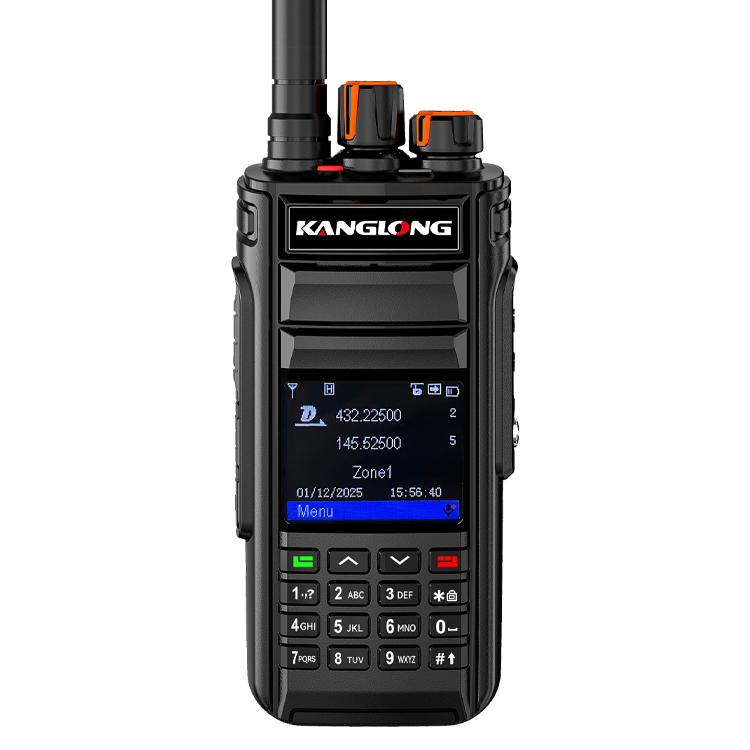
Bénéficiez d'une clarté supérieure et d'une fiabilité à toute épreuve avec le DM-900UV, une radio DMR bibande de 10 W dotée d'une étanchéité IP68 et d'une capacité d'enregistrement vocal de 300 heures.
EN SAVOIR PLUS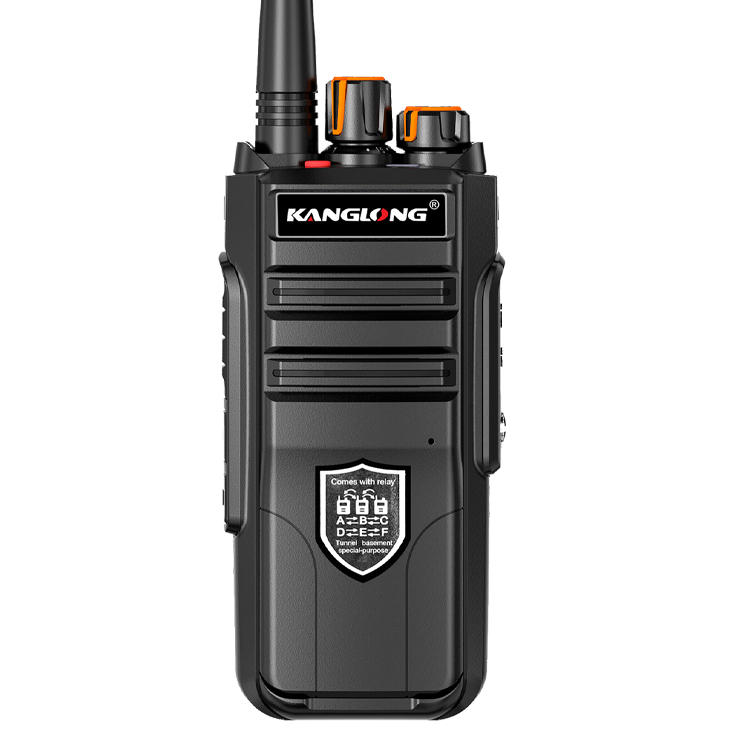
La radio mesh ad hoc D-750 est dotée d'une fonction de transfert par saut continu à 30 niveaux pour étendre la portée de communication, fournissant un signal haute puissance fiable de 8 W et une protection étanche IP68 pour une connectivité sans faille dans des environnements complexes de tunnels ou de sous-sols.
EN SAVOIR PLUS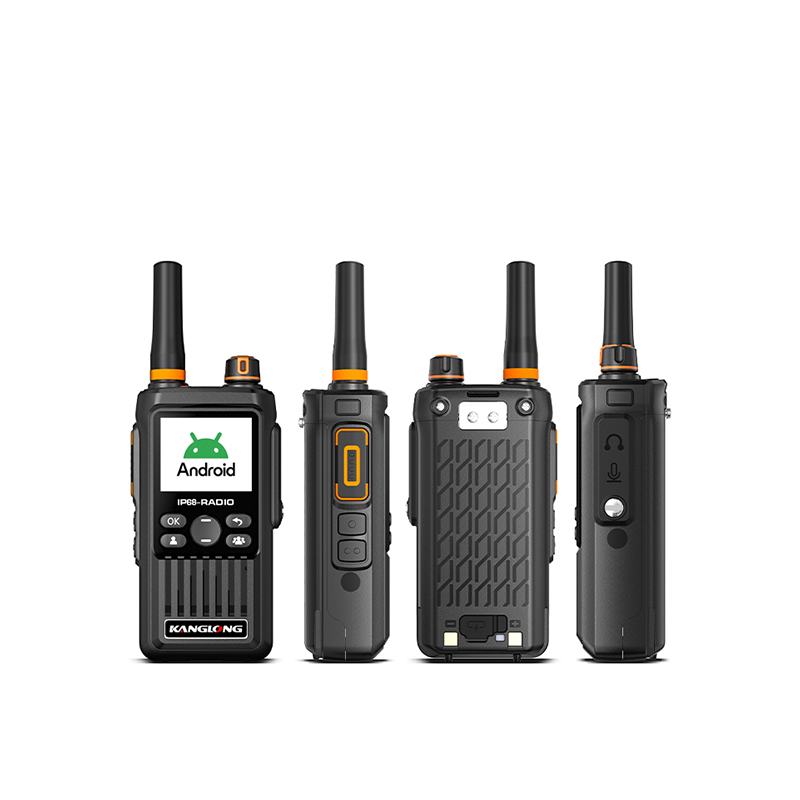
Un talkie-walkie polyvalent sous Android 8.1 4G LTE doté d'une connectivité WiFi haut débit, de données LTE Cat 4 et d'une prise en charge native de Zello et Smart PTT pour une communication mondiale fluide.
EN SAVOIR PLUS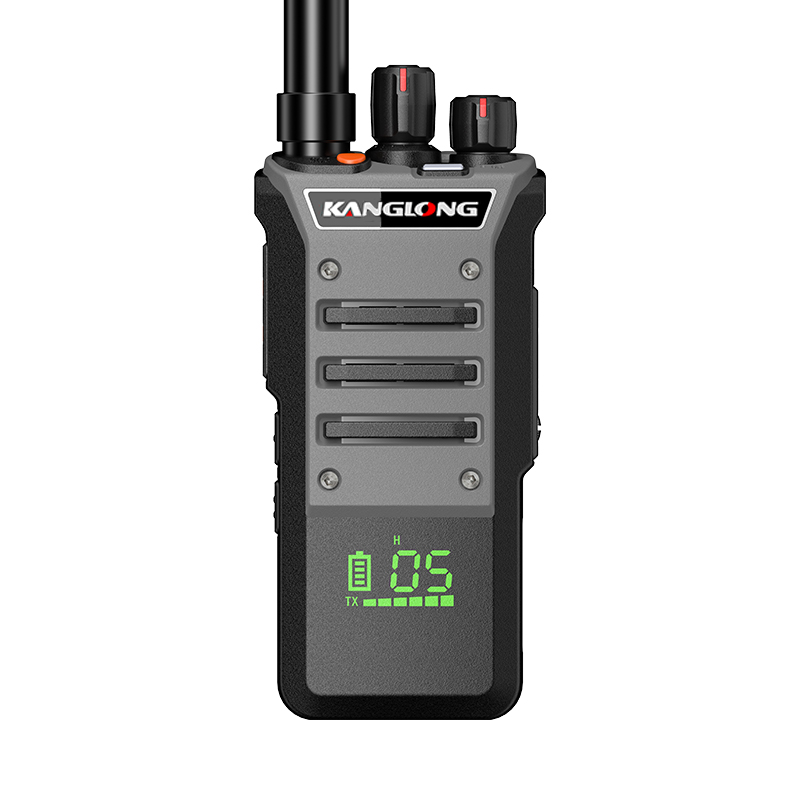
La radio bidirectionnelle haute puissance IP68 ultime de 20 W, étanche, dotée d'une batterie de 3200 mAh qui sert également de batterie de secours pour maintenir votre équipe connectée et alimentée même dans les environnements les plus difficiles.
EN SAVOIR PLUS